

Brand Loyalty
Brand Loyalty Definition
Brand loyalty describes the long-term bond between customers and a brand. It is reflected in repeated purchase behaviour, a stable preference over competing brands, and a reduced willingness to switch.
Brand loyalty develops when a brand remains consistently relevant, trustworthy and positively perceived by its target audience, leading it to be preferred over alternatives in purchase decisions. It is driven by both rational value considerations and emotional attachment. A strong reputation – which can be actively shaped through effective reputation management – provides a solid foundation for building brand loyalty.
High levels of brand loyalty increase customers’ willingness to pay, stabilise demand and make a significant contribution to long-term brand and corporate value creation.
How can brand loyalty be built?
Building brand loyalty requires a brand to first become part of the target audience’s relevant set, meaning it is actively considered in purchase decisions. This presupposes sufficient brand awareness and perceived relevance.
Ideally, the brand then becomes top of mind – the first brand mentioned spontaneously by the target audience. If it is also consistently preferred in concrete buying situations, it evolves into the first choice brand: whenever it is available, it is chosen.
With every repeated purchase and usage experience, the brand’s mental availability is reinforced. Brand loyalty therefore does not emerge from a single interaction, but through recurring, consistently positive experiences across all relevant touchpoints. The more stable and positive these brand experiences are, the greater the likelihood of long-term loyalty and repeat purchasing.
How can brand loyalty be measured?
Brand loyalty is assessed using behavioural and attitudinal metrics that capture the extent to which customers are emotionally and practically attached to a brand and its products or services. Common measurement approaches include:
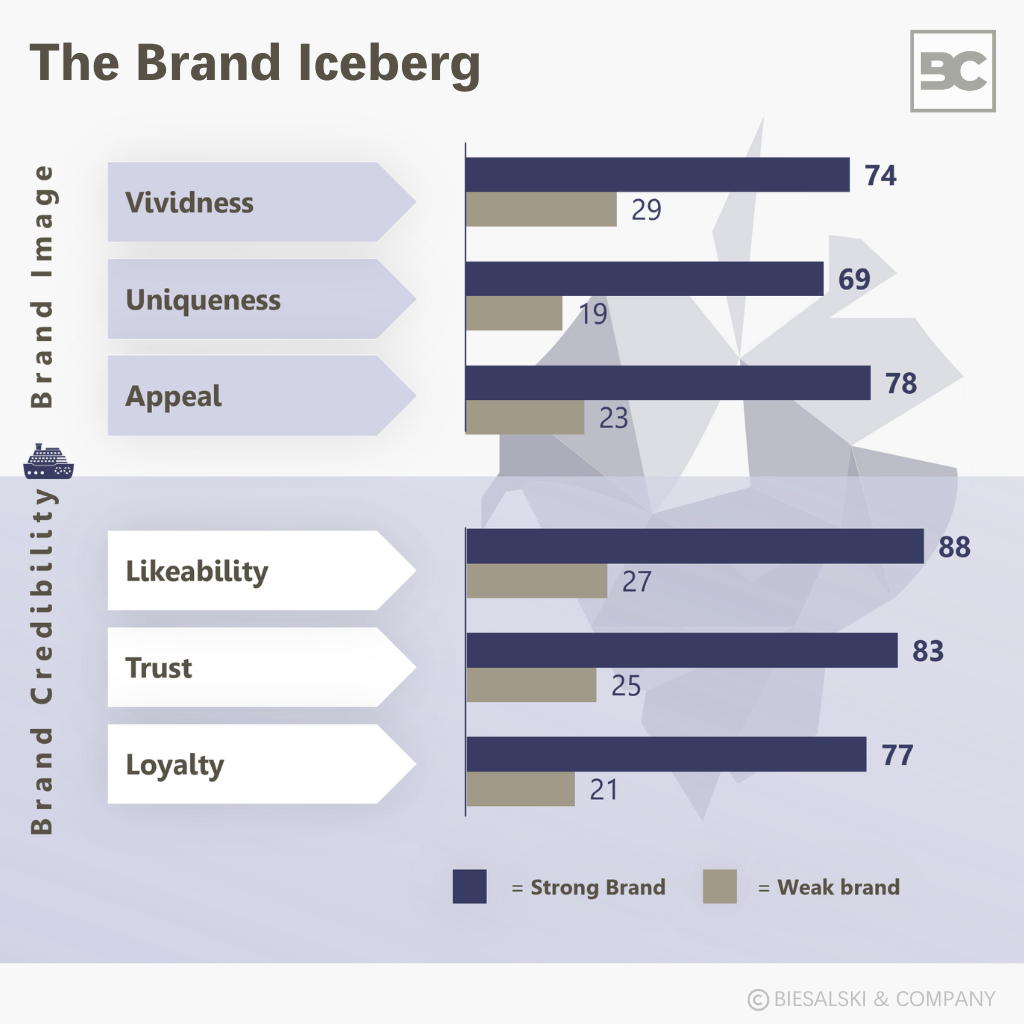
Brand Iceberg: Captures key components of brand equity such as sympathy, trust and loyalty, and illustrates their interrelationships.
Brand Funnel: Positions loyalty as the result of a progression from awareness to consideration and preference, through to repeat purchase and recommendation.
Image and loyalty metrics: For example, likelihood to recommend, probability of repeat purchase, or brand preference in comparison with competitors.
Tracking data from ongoing brand studies: Enables the monitoring of loyalty trends over time and in relation to market and competitive dynamics.
Brand loyalty is therefore a core indicator of overall brand strength.
Examples of brand loyalty
Apple is widely regarded as a strong love brand across many target audiences. Its brand loyalty has historically been so pronounced that customers would routinely queue for hours to purchase new iPhone models. Even today, product launches are eagerly anticipated and strongly demanded by millions of loyal customers worldwide.
A defining characteristic is that parts of the customer base choose to purchase successor models even though their existing devices remain technologically up to date and their product life cycle is far from complete. Purchase decisions are therefore driven less by purely functional considerations and more by emotional attachment to the brand.
In this way, brand loyalty can secure sustainable competitive advantages even in times of crisis: loyal customers remain committed to the brand under challenging economic conditions and continue to favour it over alternatives.
Contact
Would you like an initial, no-obligation discussion on this topic? Our experts will be happy to support you – simply book your preferred appointment here.