Employer Branding Roll-out: Implementing the Employer Brand Effectively
A developed employer branding strategy only takes effect once it is put into practice. The employer branding roll-out translates strategic goals into concrete measures along the employee journey. It is not only about a successful launch, but also about anchoring the employer brand in the organisation for the long term.
What is meant by an employer branding roll-out?
An employer branding roll-out is the structured implementation of a previously developed employer brand strategy. Planned measures are agreed with the departments involved, implemented and reviewed regularly. In this way, the employer brand becomes visible and tangible for existing employees and prospective applicants.
It is crucial that the roll-out does not remain a rigid process. Feedback from within the company and changes in the labour market may make adjustments necessary. Ongoing coordination and optimisation are therefore part of implementation.
What are the objectives of an employer branding roll-out?
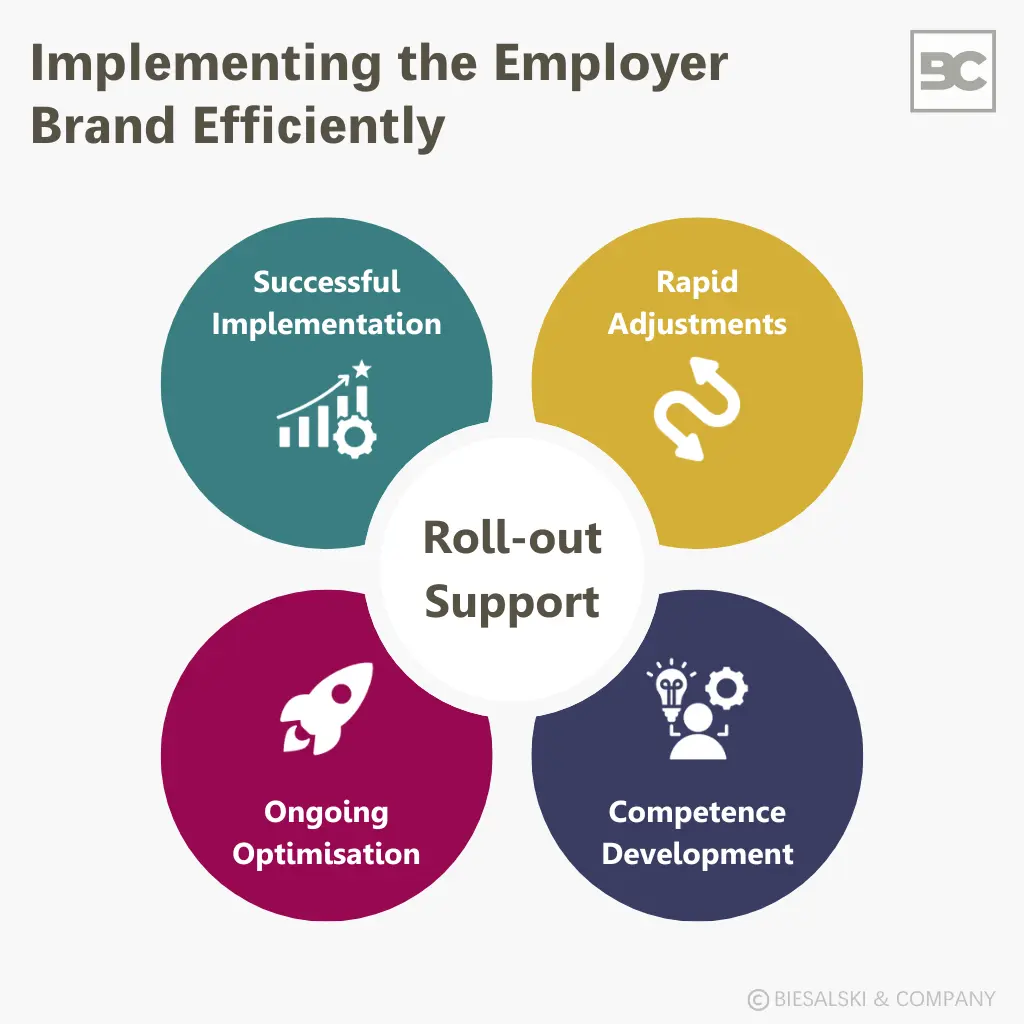
An effective roll-out combines four tasks:
Successful implementation: Delivering measures across the different phases of the employee journey, thereby strengthening perception as well as employee retention and recruitment.
Rapid adaptation: Responding flexibly to new requirements and changes in the competition for talent.
Continuous optimisation: Developing measures further on the basis of regular feedback and their relevance to the target groups.
Internal capability building: Embedding employer branding knowledge and skills in the organisation and strengthening the teams’ sense of ownership.
How does an employer branding roll-out work?
A structured roll-out comprises several closely interlinked steps:
Kick-off: Jointly defining the project plan, roles and responsibilities.
Action planning: Developing specific activities together with the responsible stakeholders.
Ongoing coordination: Coordinating measures and resources and discussing progress regularly.
Project management: Monitoring deadlines and project phases and adjusting course where necessary.
Feedback and further development: Constructively questioning and adapting measures and building up internal knowledge.
Why is the employer branding roll-out important?
A consistent roll-out makes the employer brand more visible in the labour market and supports both the retention of existing employees and the recruitment of new talent. At the same time, regular review helps to adapt measures to changing expectations.
In this way, the roll-out links the strategic direction of employer branding with day-to-day operations. Clear responsibilities, coordinated measures and internally built-up know-how help to ensure that the employer brand remains effective beyond the initial implementation.